

When Sarah opened her handmade jewelry business last spring, everyone told her the same thing: “You need Shopify.” Six months and $1,800 later, she was drowning in features she’d never use, paying for apps she didn’t understand, and watching most of her sales still happen at local craft fairs and through Instagram DMs. Sarah’s story isn’t unique; it’s the reality for countless American small business owners who’ve been sold on the idea that Shopify is the golden ticket to e-commerce success.
The truth? Shopify is overkill for 90% of US small businesses, and it’s time we had an honest conversation about why.
The Shopify Hype Machine vs. Small Business Reality
Walk into any small business networking event, and you’ll hear Shopify mentioned as if it’s the only e-commerce solution that exists. The platform has built an incredible brand, and there’s no denying its power for certain businesses. But here’s what the marketing doesn’t tell you: most small businesses in America don’t need a sophisticated, multi-channel e-commerce platform with hundreds of integrations and advanced inventory management systems.
Consider the numbers. The average American small business has fewer than five employees, generates less than $500,000 in annual revenue, and operates primarily within a local or regional market. These businesses aren’t shipping hundreds of orders daily or managing complex product variants across multiple sales channels. They’re the local bakery taking online orders for weekend pickup, the freelance graphic designer selling digital templates, or the regional contractor accepting deposits through their website.
For these businesses, Shopify represents massive overkill, like buying a commercial-grade industrial oven when all you need is a toaster.
The Hidden Cost Problem
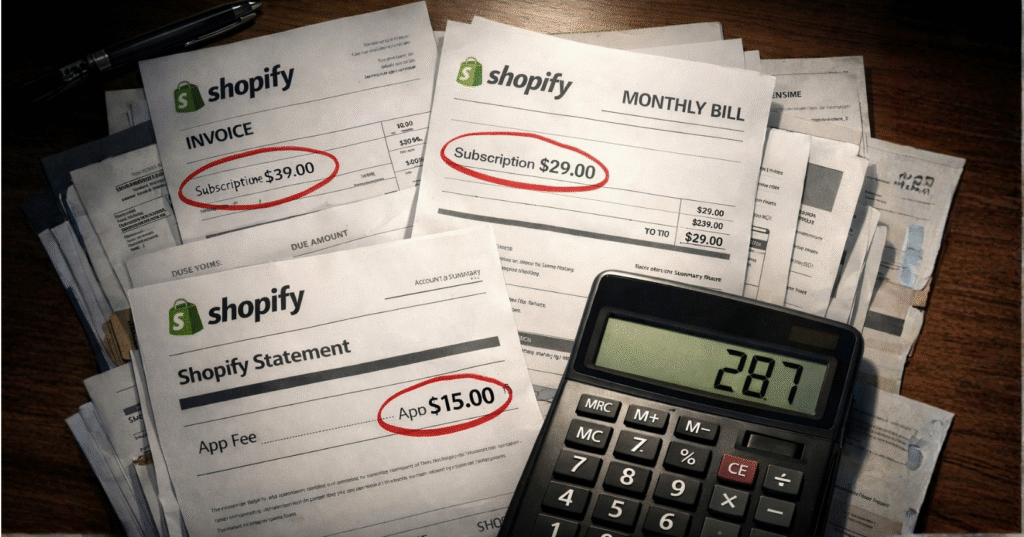
Let’s talk about what really makes Shopify overkill for the vast majority of small businesses: the cost structure. On the surface, $39 per month for the Basic plan seems reasonable. But that’s just the beginning.
The base Shopify subscription gets you a functional store, but the real expenses pile up fast. Need email marketing? That’s another $10 to $30 monthly for a proper app. Want better product reviews? Add $10 to $20. Advanced shipping calculations? Another $10. Customer loyalty program? $15 to $50 more. Better SEO tools? Keep adding. Before you know it, that $39 monthly fee has ballooned to $150 to $300, and you’re still making fewer than 50 sales per month.
Then there are the transaction fees. Unless you use Shopify Payments (which isn’t available or optimal for every business type), you’re paying 2% on top of your regular payment processor fees. For a small business operating on thin margins, these percentage points add up to real money; money that could go toward inventory, marketing, or simply keeping the lights on.
Compare this to alternatives. A simple WordPress site with WooCommerce costs maybe $15 monthly for hosting, with no transaction fees beyond standard payment processing. Square Online offers a completely free tier for businesses with basic needs. Even specialized platforms like Stan Store or Beacons charge far less while meeting the actual needs of content creators and service providers.
Feature Bloat: When More Isn’t Better
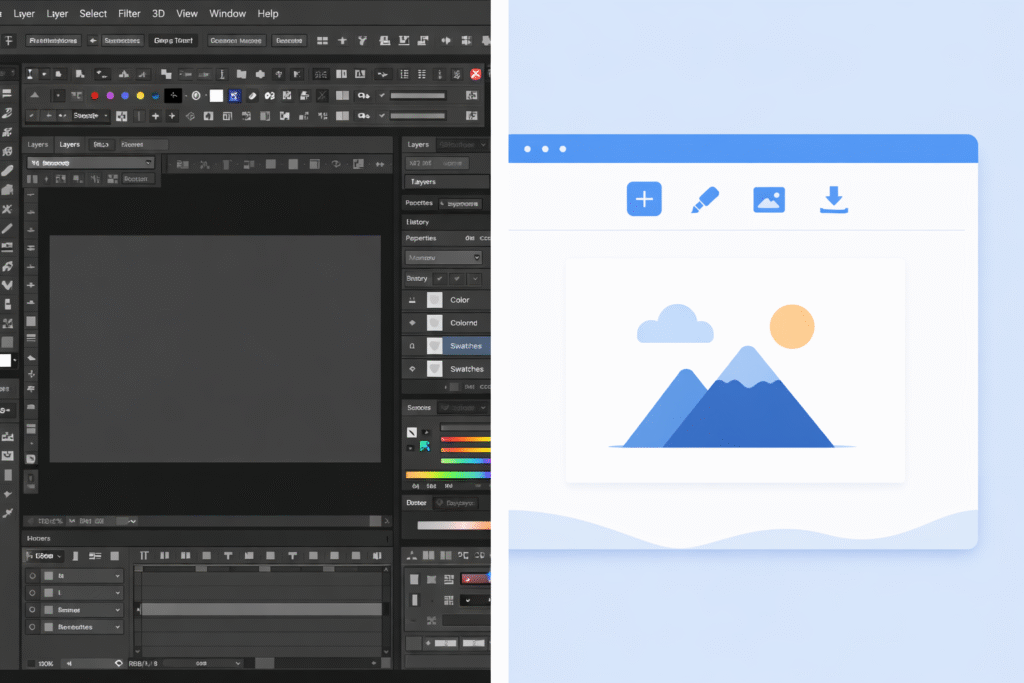
One of the core reasons why Shopify is overkill lies in its feature set. Shopify has built an incredibly robust platform capable of handling enterprise-level e-commerce operations. It can manage thousands of SKUs, process international orders with multi-currency support, handle complex tax calculations across dozens of jurisdictions, integrate with wholesale portals, and orchestrate omnichannel retail operations.
Here’s the problem: most small business owners will never use 80% of these features.
The local coffee roaster selling three blends online doesn’t need abandoned cart recovery sequences, AI-powered product recommendations, or headless commerce capabilities. The personal trainer selling workout guides doesn’t require multi-location inventory management or B2B wholesale pricing tiers. The pet groomer accepting online bookings doesn’t need Shopify’s point-of-sale hardware ecosystem.
This feature bloat creates three significant problems. First, it makes the platform unnecessarily complex to learn and manage. Small business owners are already stretched thin; they’re the CEO, marketing director, customer service rep, and janitor all rolled into one. Learning to navigate Shopify’s extensive backend, understanding which features to activate, and figuring out which of the 8,000+ apps they actually need consumes hours they don’t have.
Second, unused features create maintenance overhead. Updates break things. Apps conflict with each other. Themes need updating. The more complex your tech stack, the more time you spend maintaining it instead of growing your business.
Third, you’re literally paying for capabilities you’ll never use. It’s like buying a pickup truck with a 10,000-pound towing capacity when you only need to haul groceries.
The Wrong Solution for Most Business Models

Understanding why Shopify is overkill for 90% of US small businesses requires examining what most small businesses actually sell and how they sell it.
Many small businesses aren’t running traditional product-based e-commerce at all. They’re service businesses: consultants, coaches, designers, contractors who need to accept payments and maybe sell a few digital products or merchandise items on the side. For these businesses, a platform like Shopify is solving problems they don’t have while failing to address their actual needs, like robust scheduling systems or client portals.
Others operate primarily through social media, especially Instagram and Facebook. Their “sales funnel” is a DM conversation leading to a Venmo payment or a simple checkout link. These businesses don’t need an entire e-commerce website; they need a lightweight way to process payments and maybe showcase their work. Solutions like Linktree with payment integration, Stan Store, or even Instagram’s native shopping features serve them better at a fraction of the cost.
Then there are local businesses where the vast majority of sales still happen in person or through phone orders. The small-town hardware store, the family-owned restaurant, the local boutique: these businesses might benefit from an online presence, but they don’t need Shopify’s full e-commerce infrastructure. They need a simple website with their hours, location, and maybe a way to place orders for pickup. A basic Squarespace or Wix site with a contact form often suffices.
The Marketing vs. Reality Gap
Part of why Shopify seems like the obvious choice despite being overkill is the enormous gap between marketing promises and small business reality. Shopify’s marketing showcases success stories of brands doing millions in revenue, launching products that go viral, and scaling internationally. These stories are inspiring, but they’re also misleading.
The marketing implies that using Shopify is what made these businesses successful, when in reality, these businesses succeeded because they had great products, strong marketing, and often significant capital investment. The platform was just the tool they used, and they had the volume to justify its costs.
For the average small business owner, this creates unrealistic expectations. They think, “If I build it on Shopify, customers will come.” They invest time and money into setting up a beautiful Shopify store, installing apps, configuring settings, and then… crickets. Because Shopify doesn’t solve the fundamental challenges most small businesses face: finding customers, building trust, creating compelling offers, and marketing effectively.
Shopify is overkill because it optimizes for scaling a business that’s already working, not for getting a business off the ground. It’s built for businesses that have product-market fit and need infrastructure to handle growth, not for businesses still figuring out what to sell and to whom.
When Simpler Solutions Make More Sense
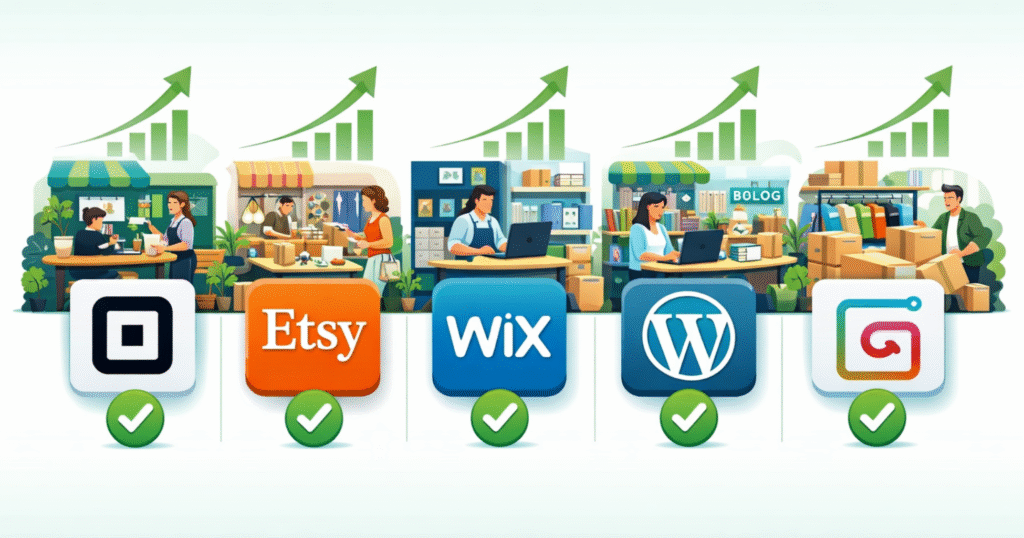
Image Prompt 5: “Clean grid layout showing alternative platform logos and icons (Square, Etsy, Wix, WordPress, Gumroad) with small illustrated successful businesses in background, green checkmarks, upward growth arrows, fresh green and blue color scheme, modern infographic style”
The good news is that understanding why Shopify is overkill helps small business owners find better-suited alternatives. The market now offers specialized solutions for different business types that are simpler, cheaper, and more focused.
For service-based businesses, platforms like Calendly combined with Stripe work beautifully. For creators selling digital products, Gumroad or Stan Store provide everything needed without complexity. For local businesses, a simple WordPress site with a contact form and Google Business Profile drives more actual business than a full Shopify store ever would. For makers and artists selling on the side, Etsy’s built-in audience and simpler interface often deliver better results.
Even for businesses that do need basic e-commerce, alternatives exist. Square Online offers a free tier that’s perfect for businesses just starting out. Big Cartel targets independent makers with simpler pricing and features. Wix and Squarespace have improved their e-commerce capabilities significantly and include hosting, making them more economical for smaller catalogs.
The key is matching the tool to your actual business model, not your aspirational one. If you’re doing $2,000 monthly in online sales, you don’t need the same infrastructure as a business doing $200,000.
The Right Tool for the Right Business
This isn’t an attack on Shopify; it’s an excellent platform for businesses that actually need its capabilities. If you’re shipping 50+ orders daily, managing complex inventory across multiple channels, running sophisticated marketing automation, or planning significant growth, Shopify might be worth every penny.
But for 90% of US small businesses, Shopify is overkill because most small businesses don’t operate at that scale and many never will. That’s not failure; it’s simply the reality of small business in America. The sole proprietor making $75,000 annually is running a successful, sustainable business that supports their family. They just don’t need enterprise e-commerce infrastructure.
The real question isn’t “Should I use Shopify?” It’s “What do I actually need to serve my customers and grow my business?” Often, the answer is something far simpler, far cheaper, and far easier to manage than Shopify.
Moving Forward: Right-Sizing Your Tech Stack
If you’re a small business owner currently using Shopify and feeling overwhelmed, or considering it and feeling intimidated, take heart. You’re not failing; the tool just might not fit your needs. Audit what you’re actually using, what you’re actually paying for, and what’s actually driving sales. Then explore whether simpler alternatives might serve you better.
Your business deserves tools that empower you, not overwhelm you. Sometimes the best business decision isn’t choosing the most powerful platform; it’s choosing the right-sized one. For most American small businesses, that means recognizing that Shopify is overkill and finding solutions that match their actual scale, needs, and budget.
Success in small business comes from serving customers well, marketing effectively, and managing resources wisely, not from using the same e-commerce platform as billion-dollar brands. Choose tools that help you do that, whatever they might be.