
clickiecart

Uncategorized

shop spring vase
Uncategorized

Shop Spring Vase In The US: Best Websites To Purchase

In case you intend to shop spring vase collections this spring, you are not alone. When spring sets in, houses are cleaned, flowers are shown, and the decor of the interior is changed according to the light and sunny motives. A well-chosen vase could change your living room instantly. Thus, it becomes critically important to know where and how to shop for spring vase possibilities on the Internet in the US. This guide will help you know where to shop for spring vase designs, how various websites in the US have been compared, and which one would be the one that fits your budget and your taste. Moreover, useful purchasing guidelines will be given to make sure the correct choice is made with certainty. Why You Should Shop Spring Vase This Season 🌷 In spring, the natural elements are normally taken inside. Fresh flowers are exhibited more often. Ornamental objects are substituted by seasonal accessories. Due to this, there is a high demand for spring vase designs. A beautiful vase is also not used to hold flowers. Rather, it is frequently handled as an ornamental outfit. Visual balance is achieved when it is put on a dining table, entry console, or a shelf in the bedroom. In addition, there are seasonal colors like pastel pink, mint green, and soft blue that are usually presented in the form of vases. This means that in the event that you do buy spring vase collections, you are investing in both functionality and style. Types of Vases to Consider Before You Shop Spring Vase 🌼 You should know what kind of vase is appropriate in your interior before purchasing spring vase products over the Internet. 1️⃣ Ceramic Spring Vases The ceramic vases are among the most popular vases as they are durable. They are mostly made in flower patterns or a matte finish. Also, sometimes handcrafted textures are introduced because it enhances beauty. These vases are the best fit for the dining tables and living rooms. 2️⃣ Glass Spring Vases Glass vases are commonly used in modern houses. Openness gives colorful flowers a beautiful appearance. Moreover, the light intensity is reflected to improve the general appearance. When you are shopping for spring vase collections online, both clear and tinted glass options are offered. 3️⃣ Minimalist Neutral Vases White, beige, and ivory are neutral colors that are in fashion at the moment. These vases are typically Scandinavian-fashioned interiors. They are simple and therefore easily melt with other decoration themes. 4️⃣ Statement Decorative Vases In other instances, daring lines and abstract curves are used. Without flowers, there is attention that is captured. These vases are frequently taken as the center of decoration. Where to Shop Spring Vase in the US: Comparison with the Website 🛍️. This is what you should do with the spring vase products online, and there are a few US sites to visit. Nevertheless, delivery policies, pricing, and quality are different. The following is a detailed comparison to enable you to make an informed choice. 🏡 Wayfair Wayfair has a reputation for having an enormous variety of products in home decor. Vase choices are listed in thousands, and there are also filters that will help to sort the search by material, color, and customer rating. Advantages: Price Range: $15 – $120 Thus, when shopping spring vase, Wayfair can be regarded as a powerful choice in case variety and freedom of choice in terms of the budget are your priorities. Amazon Amazon is usually selected due to the fact that the members of Prime are guaranteed fast delivery. Thousands of sellers offer spring vases of different varieties. Advantages Consideration: The quality can be different when it comes to sellers. That is why the reviews are to be reviewed. Price Range: $10 – $100 In case the convenience is a major consideration, Amazon is a viable spot to find spring vase collections in a short period of time. Target Target is valued because of its edited seasonal collections. New lines of decor are also implemented every spring. The designs tend to be trend-oriented. Advantages Price Range: $12 – $60 Therefore, Target would be an appropriate place to invite the customers who value aesthetic and low-priced goods. 🌿 Pottery Pottery Barn has been known to have excellent craftsmanship. The materials are of high quality, and beautiful finishes are provided. Advantages Price Range: $40 – $200 Pottery Barn can be chosen when you visit the shop and have to shopspring vase decoration in case you want to see the long-term value and sophistication. 🖐️ Etsy Etsy bridges the gap between customers and single campaigns. Both customized and handmade vases are rampant. Advantages Price Range: $25 – $150 Therefore, in the case of originality, Etsy can be looked into when thinking about buying spring vase items. Website Best For Price Range Quality Level Delivery Wayfair Variety & Deals $15–$120 Good–Premium Moderate Amazon Fast Delivery $10–$100 Varies Fast Target Trendy Styles $12–$60 Good Fast Pottery Barn Luxury Designs $40–$200 Premium Moderate Etsy Handmade Pieces $25–$150 Unique Seller-Based Important Factors to Consider Before You Shop Spring Vase 🌸 There are some aspects that you should not overlook when you are shopping for a spring vase online. To begin with, the stems of the flowers should be equal to the vase height. Otherwise, arrangements can seem unbalanced. Second, the material durability should be considered. Glass can be attractive, but a ceramic can be more stable. Third, there is a need to review the return policies. Should some damage be incurred in delivery, it should have replacement possibilities. In addition, a review of customer reviews assists in preventing purchases of poor quality. Styling Tips After You Shop Spring Vase 🌷 When you buy spring vase décor, making it look nice is really important. You can put tulips in tall glass vases. You can also put lilies in pastel ceramic vases. If you put three spring vase décor of different heights together, it looks really nice. If your spring vase décor is

top ecommerce companies
Uncategorized

Top Ecommerce Companies: How to Choose Best for Your Needs

The top ecommerce companies are changing the way people buy things, the way companies sell things, and the way online money is made. Nowadays, online shopping is not just about making things easy for people. It is a part of modern shopping. As the internet gets better and people start buying things more often, the big online shopping companies are getting more powerful in many areas and markets. The online shopping companies are really making a difference. This guide is about the top ecommerce companies. We look at how these ecommerce companiesre growing. We also look at the ways they do business and the technology they use. The e-commerce companies use systems that help them sell a lot of things online all over the world. They are really goodat digital commerce. The e-commercecompanies are very successful. Understanding the Role of Top e-Commerce Companiesin the Digital Economy The top ecommerce companies are really important for the way we shop online today. They help people who want to buy things find people who are selling things. This makes it easy for us to buy what we want. The top e-commercecompanies also help people get jobs and start their online businesses. They make things and find new ways to do things, which is good for everyone. The top e-commercecompanies do a lot of things for the economy and/or people who like to shop online. So the big e-commerce companies like Amazon have a lot of influence that goes way beyond buying things on the internet. The influence of top ecommerce companies is really big, n andaffectss alot off things. The influence of e-commerce companies is not just about online shopping, but also about how people live and shop. What makes a company an e-commerce company? Some of the things that make a company an e-commerce company include: These are just a few things that make a company one of the top e-commerce companies: Strategic Vision When we think about a plan, we need to think about the long term. We have to make a strategy that will work for a long time. This plan is made before we try to make our business bigger. We build websites and other online platforms so they can handle people in the future, not just the people who are using them now. We want these digital platforms to be readyfor when our business grows. Operational Excellence Things are done in a way that saves time and gets results. This means that everything runs smoothly even when the company is growing fast. The company’ss processes are set up to be efficient and automated and to work quickly. This helps the company’ss operations stay stable during times of high growth. The processes are really good at getting things done quickly. This is very importantfor the company’ss operational stability. Customer Experience Design When you use our service,e we want to make sure you are happy. So we make sure that finding your way,y paying for things, getting help, and getting your stuff delivered is all easy to do. Navigation, checkout,d support, and delivery are all set up in a way that makes sense. Technology Foundation These dadayssonline shopping websites are made using cloud infrastructure and artificial intelligence systems. They also use data to automate a lot of things. Online shopping websites like these are what people call e-commerce systems. EcE-commerceystems are really popular now. They are built on cloud infrastructure, artificial intelligence systems, a nd data-driven automation. This makes e-commerce systemsvery usefulfor people who shop online. Digital Infrastructure of Top E-Commerce Companies The top e-commerce companies use these computer systems every day. People use automation workflows to make their work easier. Automation workflows are like a set of instructions that computers follow to do tasks. These automation workflows can do things on their own without people having to do them. How to Build Market Authority They create a lot of good content about e-commerce. This helps people trust the e-commercecompanies. The top e-commercecompanies also work with people who are experts ine-commercee. This helps them learn more about e-commerceand build relationships with people who care about e-commerce. Business Models Used by Top E-Commerce Companies The best online shopping companies use business models that can change easily. They like to have business models. This means the top e-commerce companies are able to try things and adjust their plans as they go along. The top ecommerce companies reallylike business models because they can help them succeed. Marketplace Model There are sellers on one website. This means people can buy a lot of products from this website. The sellers also try to sell things atprices than each other. This is good for the people who are buying the products because they can get a deal. They can choose from the products and find the cheapest one. The website has things to buy because many sellers are selling on it. Direct-to-Consumer Model When companies sell things directly to the people who are going to use them,m the companies make money, and they have more control over their brand. This is because brands like to be in charge of how their productsre sold and what people think of them. Brands sell directly to customers,wh ich isreally goodfor improving margins and brand control. Subscription Model The company gets money over and over from automated billing systems. This is what we call recurring revenue. Recurring revenue is very important because it comes in regularly. We make recurring revenue when we use automated billing systems. Hybrid Model We use a lot of models together so that our system can handle a lot of work and be very flexible. The models are combined to make the system very scalable and to make it very flexible. This means the models can work well with things and can be used in many ways. Technology Innovation in Top E-Commerce Companies Innovation is always being added to the way things are done at our company: we are always looking for ways to do

Uncategorized

The Ultimate 2026 Valentine’s Day Gift Guide for Her and Him

2026 Valentines Day gift guide for her and him is created to help you choose thoughtful and meaningful gifts that truly express love and care. Valentine’s Day is one of the most special occasions when couples celebrate romance connection and lasting relationships through memorable gifting experiences. Whether you are shopping for her or him, this complete Valentine’s Day gift guide will help you discover thoughtful and trending gift ideas. At ClickieCart, we bring together trusted platforms and brands that make online gifting easy and enjoyable. This guide highlights top gift ideas from Fashingo, PRINTRENDY, Primallife, and DHgate.com to help you make this Valentine’s Day unforgettable. Why Choosing the Right Valentine’s Day Gift Matters A Valentine’s Day gift is more than just a product. It is an expression of love, care, and appreciation. The right gift can create lasting memories and strengthen emotional bonds. In 2026, people prefer gifts that align with lifestyle choices such as fashion, comfort, wellness, and uniqueness. Online shopping has made it easier than ever to find the perfect gift. With platforms like ClickieCart, you can explore multiple categories and brands in one place, saving time while ensuring quality and variety. 2026 Valentines Day gift guide for her and him Fashion remains one of the most popular Valentine’s Day gift categories. Clothing and accessories are practical, stylish, and meaningful when chosen thoughtfully. PRINTRENDY for Bold and Expressive Fashion PRINTRENDY is perfect for individuals who love creative and expressive fashion. Their designs focus on modern prints, bold colors, and stylish patterns that stand out. Gifting PRINTRENDY apparel shows that you understand your partner’s confidence and individuality. Some of the best Valentine’s Day gift ideas from PRINTRENDY include printed t shirts with unique designs, trendy hoodies for casual outings, and stylish outfits suitable for everyday wear. These gifts work well for both her and him and are ideal for couples who enjoy modern fashion trends. PRINTRENDY clothing is not just about looks but also about comfort, making it a thoughtful gift that your partner can enjoy long after Valentine’s Day. Fashingo for Everyday Comfort and Style Fashingo is a great choice for people who prefer subtle, elegant, and comfortable clothing. Their apparel is designed for daily wear while maintaining a fashionable appearance. If your partner values comfort without compromising on style, Fashingo products make an excellent Valentine’s Day gift. Gift ideas from Fashingo include soft tops, relaxed loungewear, and seasonal outfits that can be worn at home or outdoors. These gifts feel personal and practical, showing that you care about your partner’s everyday comfort. Fashion gifts from Fashingo are ideal for couples who enjoy simple and timeless styles. Wellness and Self Care Gifts That Show Thoughtfulness In recent years, self care and wellness gifts have become extremely popular. Valentine’s Day is the perfect opportunity to gift something that promotes comfort, relaxation, and well being. primallife for Natural Self Care Essentials primallife focuses on wellness products made with natural ingredients. Their products are designed for daily use and are gentle on the skin. Gifting primallife products reflects care, attention, and emotional warmth. Valentine’s Day gift ideas from primallife include natural lip balms, daily care products, and small wellness kits. These items are perfect for partners who appreciate minimal, thoughtful, and health focused gifts. Self care gifts are especially meaningful because they remind your partner to take time for themselves while thinking of you. Unique and Budget Friendly Gifts from Global Marketplaces Sometimes the best gifts are the ones that feel unique and unexpected. Global marketplaces provide access to a wide variety of products that are not always available locally. DHgate.com for Creative and Unique Valentine’s Gifts DHgate.com is a well known global online marketplace offering products across multiple categories. It is an excellent platform for finding unique Valentine’s Day gifts at different price points. Popular gift options from DHgate include couple accessories, personalized items, fashion accessories, gadgets, and decorative pieces. Whether you are looking for something romantic, fun, or creative, DHgate.com offers endless possibilities. This platform is ideal for shoppers who want variety, affordability, and unique gift ideas. Valentine’s Day Gift Ideas for Her Fashion apparel from PRINTRENDYComfortable outfits from FashingoNatural self care products from primallifeAccessories and personalized gifts from DHgate.com These gifts are perfect for expressing love while matching her personal style and preferences. Valentine’s Day Gift Ideas for Him Printed t shirts and hoodies from PRINTRENDYCasual and comfortable clothing from FashingoDaily care essentials from primallifeGadgets and accessories from DHgate.com These options combine style, comfort, and practicality, making them ideal Valentine’s Day gifts for him. Final Thoughts Valentine’s Day 2026 is all about meaningful and thoughtful gifting. Instead of choosing something ordinary, focus on gifts that reflect personality, comfort, and emotional connection. Whether you select fashion, wellness products, or unique global finds, the right gift can make this day truly special. ClickieCart helps you discover trusted platforms and trending products in one place, making your Valentine’s Day shopping smooth and stress free. Choose gifts that create memories, express love, and strengthen your bond. Make this Valentine’s Day memorable with ClickieCart and celebrate love the right way. Happy Valentine’s Day 2026

Uncategorized

Buy Globally, Sell Globally: The Blueprint for the Modern E-Commerce Entrepreneur

The world is shrinking. Ten years ago, if you wanted to start a retail business in the United States, you needed a brick and mortar storefront, a massive warehouse, and a rolodex of local suppliers. Today the game has changed entirely. The barriers to entry have crumbled and have been replaced by digital bridges that connect a buyer in New York directly to a factory in Shenzhen, or a boutique in Los Angeles to a designer in Seoul. At ClickieCart, our philosophy is simple: Buy Globally, Sell Globally. But what does that actually look like in practice? Whether you are a savvy shopper looking for the next big trend or an aspiring entrepreneur ready to launch your own dropshipping empire, you need the right ecosystem. You need reliable sourcing partners, high margin wellness products, and the cutting edge AI tools that make running a global business possible from a laptop. In this guide, we are pulling back the curtain on the software, apps, and brands that power the ClickieCart ecosystem. These are the tools that allow us, and can help you, to master the art of global commerce. Sourcing Giants: Where Trends Are Born If you want to sell globally, you have to source intelligently. The United States market is hungry for speed, variety, and unique designs. Relying on the same three local wholesalers as everyone else is a recipe for mediocrity. To stand out, we rely on two massive pillars of global trade: FashionGo and DHgate. FashionGo: The Pulse of US Style For anyone in the apparel game, FashionGo is not just a marketplace. It is a necessity. Based in Los Angeles, the beating heart of American fast fashion, FashionGo is the premier B2B wholesale platform connecting retailers with thousands of brands and vendors. Why it matters for the US Market: If you are looking to curate a collection that feels current and Western, FashionGo is the tool of choice. DHgate: The Bridge to the World’s Factory On the other side of the spectrum is DHgate.com. While FashionGo handles the boutique style, DHgate provides the sheer scale of international manufacturing. It is one of the leading cross border e-commerce marketplaces in China and is designed specifically to help small and medium sized retailers access the same factories that big box stores use. The “Buy Globally” Advantage: The High Ticket Wellness Niche: Primal Life Sourcing cheap goods is one strategy, but the US market is also seeing a massive shift toward Health, Wellness, and Sustainability. The modern American consumer is label conscious. They do not just want products. They want solutions that are safe, organic, and effective. This is why Primal Life Organics is a cornerstone of our affiliate recommendations. Why Primal Life? Founded by Trina Felber in Akron, Ohio, Primal Life Organics represents the gold standard of the “Clean Beauty” movement. By featuring brands like Primal Life, ClickieCart signals that “Global Shopping” does not mean “Low Quality.” It means finding the best innovations, wherever they are. The AI Tools That Run the Show Sourcing products and finding great brands is only half the battle. The other half is operations. How do you compete with giant corporations when you are a team of one or two? The answer is Artificial Intelligence (AI). At ClickieCart, we believe that AI is the great equalizer. Here are the types of affiliated software and AI tools that are essential for the modern digital entrepreneur. 1. AI for Visuals: Fotor In e-commerce, the eye buys. If your product photos look dark or amateurish, you lose the sale instantly. 2. AI for Operations: AutoDS & Tradelle If you are using the DHgate or FashionGo dropshipping model, you cannot manually copy and paste addresses. You will burn out. 3. AI for Content & Growth: Jasper & Tidio Writing 1,000 word blog posts, product descriptions, and ad copy takes time. Building the “Sell Globally” Mindset Having the tools is one thing. Using them effectively is another. To truly succeed in the “Buy Globally, Sell Globally” ecosystem, you need to adopt a specific mindset. Diversify Your Supply Chain Do not put all your eggs in one basket. Use FashionGo for your fast moving, trendy items that need to arrive in 3 to 5 days. Use DHgate for your high volume, low cost staples. This hybrid model protects you. If supply chains in Asia slow down, you have US stock. If US prices spike, you have Asian alternatives. Lead with Quality (The Primal Life Lesson) The days of selling low quality junk are over. Returns will kill your profit margins. Focus on products that solve real problems. Primal Life works because it solves a health concern with a premium solution. When you choose products to sell, ask yourself if this adds value. Automate or Die This sounds harsh, but it is the reality of 2024 and beyond. If you are manually fulfilling orders, you are wasting time that should be spent on marketing. Use the AI tools mentioned above to handle the grunt work. Your job is to be the CEO, not the warehouse manager. Conclusion: Your Turn to Launch The era of “Buy Globally, Sell Globally” is not coming. It is already here. The tools we have discussed today, including FashionGo for trends, DHgate for scale, Primal Life for quality, and AI software for efficiency, are the keys to the kingdom. They lower the barrier to entry so that anyone with drive and an internet connection can build a business that spans continents. At ClickieCart, we are committed to sharing these resources because we believe there is enough room for everyone to succeed. Whether you are browsing our site for the latest LED whitening kit or looking for inspiration to start your own shop, remember this: You have the world at your fingertips. Start clicking.

Uncategorized

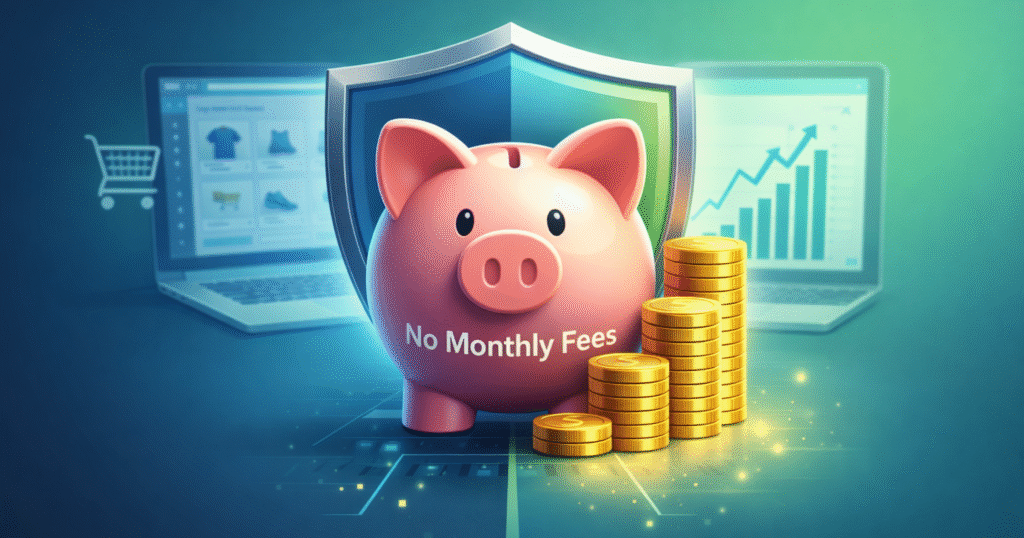
Stop Paying Monthly Fees: The Smarter Way to Run an Online Store

Every month, thousands of entrepreneurs watch their bank accounts drain as subscription fees pile up. Platform costs, payment processing fees, app add-ons, and marketing tools: the expenses never seem to stop. If you’re tired of watching your profit margins shrink before you even make your first sale, it’s time to discover a smarter way to run an online store that puts money back in your pocket. The Hidden Cost of “Affordable” Monthly Plans When you first launch your e-commerce business, a $29 or $79 monthly fee seems reasonable. But here’s what most platform providers don’t advertise upfront: that’s just the beginning. To get the features you actually need (advanced analytics, abandoned cart recovery, professional themes, email marketing integration, and inventory management) you’ll likely need to upgrade to premium tiers or purchase additional apps. Before you know it, you’re paying monthly fees that exceed $200, $300, or even $500 when you factor in all the hidden costs. For a small business owner or someone just starting out, these recurring expenses can be the difference between profitability and constant financial stress. Why Traditional Platforms Keep You Locked In The subscription model isn’t designed with your best interests in mind. E-commerce platforms profit from keeping you dependent on their ecosystem. They start with attractive entry-level pricing to get you hooked, then gradually increase costs as your business grows and you become more reliant on their infrastructure. This creates a fundamental problem: the more successful you become, the more you pay. Your growth directly benefits the platform provider while eating into your margins. It’s a model that rewards the service provider, not the entrepreneur who’s doing the actual work of building a business. The Alternative: One-Time Investment Solutions Stop paying monthly fees and consider platforms that operate on a one-time payment model. These solutions allow you to purchase the software outright, giving you lifetime access without the recurring charges that drain your resources month after month. Self-hosted e-commerce platforms like WooCommerce paired with WordPress, or standalone solutions like PrestaShop and OpenCart, offer robust functionality without subscription costs. Yes, you’ll need to pay for hosting, but even premium hosting rarely exceeds $20 to $30 monthly, which is a fraction of what you’d spend on platform subscriptions and their required add-ons. Building Your Store the Smart Way When you choose the smarter way to run an online store, you’re not just saving money; you’re gaining control. Here’s how to build a cost-effective e-commerce business: Choose Self-Hosted Platforms Self-hosted solutions put you in the driver’s seat. You own your data, control your customizations, and aren’t subject to arbitrary price increases or feature limitations. WooCommerce, for instance, is free and powers over 28% of all online stores. With thousands of free and premium extensions available, you can build exactly the store you need. Invest in Themes Once Instead of paying monthly fees for premium templates on subscription platforms, purchase a quality theme one time. Marketplaces like ThemeForest offer professional e-commerce themes for $50 to $100 that you own forever. Many come with lifetime updates and support, giving you ongoing value without recurring costs. Use Free or Affordable Tools The e-commerce ecosystem is filled with excellent free tools. Google Analytics provides sophisticated tracking at no cost. Mailchimp offers free email marketing for up to 500 subscribers. Canva enables professional graphic design without expensive software. By strategically combining free and low-cost tools, you can build a professional operation without the monthly drain. Leverage One-Time Payment Plugins For advanced features like booking systems, membership areas, or subscription management, many developers offer plugins with one-time pricing. A $100 plugin you purchase once is dramatically more economical than paying monthly fees for similar functionality over several years. The Real ROI of Eliminating Subscriptions Let’s run the numbers. A typical subscription-based store might spend: Over five years, that’s $14,760 in platform costs alone. Compare this to the smarter way to run an online store: The savings speak for themselves. By stopping paying monthly fees, you save over $12,000 in five years. That’s money that can be reinvested in inventory, marketing, or business growth. Overcoming the Technical Hurdle The biggest objection to self-hosted solutions is complexity. “Isn’t it too technical?” people ask. The truth is, modern e-commerce platforms have become remarkably user-friendly. WordPress with WooCommerce offers one-click installation on most hosting providers. Extensive documentation, video tutorials, and community forums provide support when you need it. If you can navigate a subscription platform’s dashboard, you can manage a self-hosted store. The learning curve is minimal, and the long-term rewards (both financial and in terms of control) are substantial. Taking Back Control of Your Business [Image 6: Empowerment Visual] Prompt: An entrepreneur standing confidently in front of their own online store interface with “100% owned” badge, surrounded by icons of growth arrows, piggy bank, and success metrics, inspirational illustration style, purple and teal gradient background When you stop paying monthly fees to run your online store, you’re making a statement about how you want to do business. You’re choosing ownership over rental, long-term thinking over short-term convenience, and true independence over platform dependence. The smarter way to run an online store isn’t about cutting corners or sacrificing quality. It’s about being strategic with your resources and building a sustainable business model that doesn’t leak money every single month. It’s about recognizing that the subscription economy is designed to benefit the platform, not you. Making the Transition If you’re currently locked into a subscription platform, transitioning might seem daunting. However, most e-commerce solutions offer migration tools and services. Many entrepreneurs discover that moving to a self-hosted platform is easier than expected, and the immediate reduction in monthly fees makes the effort worthwhile. Start by researching self-hosted options that align with your business needs. Calculate your current monthly expenses across all subscriptions. Explore hosting providers that offer managed WordPress or e-commerce-specific plans. Take advantage of free trials and demonstrations to find the right fit. The Future of Your Store Five years from now, do you want to have

Uncategorized

Why Shopify Is Overkill for 90% of US Small Businesses

When Sarah opened her handmade jewelry business last spring, everyone told her the same thing: “You need Shopify.” Six months and $1,800 later, she was drowning in features she’d never use, paying for apps she didn’t understand, and watching most of her sales still happen at local craft fairs and through Instagram DMs. Sarah’s story isn’t unique; it’s the reality for countless American small business owners who’ve been sold on the idea that Shopify is the golden ticket to e-commerce success. The truth? Shopify is overkill for 90% of US small businesses, and it’s time we had an honest conversation about why. The Shopify Hype Machine vs. Small Business Reality Walk into any small business networking event, and you’ll hear Shopify mentioned as if it’s the only e-commerce solution that exists. The platform has built an incredible brand, and there’s no denying its power for certain businesses. But here’s what the marketing doesn’t tell you: most small businesses in America don’t need a sophisticated, multi-channel e-commerce platform with hundreds of integrations and advanced inventory management systems. Consider the numbers. The average American small business has fewer than five employees, generates less than $500,000 in annual revenue, and operates primarily within a local or regional market. These businesses aren’t shipping hundreds of orders daily or managing complex product variants across multiple sales channels. They’re the local bakery taking online orders for weekend pickup, the freelance graphic designer selling digital templates, or the regional contractor accepting deposits through their website. For these businesses, Shopify represents massive overkill, like buying a commercial-grade industrial oven when all you need is a toaster. The Hidden Cost Problem Let’s talk about what really makes Shopify overkill for the vast majority of small businesses: the cost structure. On the surface, $39 per month for the Basic plan seems reasonable. But that’s just the beginning. The base Shopify subscription gets you a functional store, but the real expenses pile up fast. Need email marketing? That’s another $10 to $30 monthly for a proper app. Want better product reviews? Add $10 to $20. Advanced shipping calculations? Another $10. Customer loyalty program? $15 to $50 more. Better SEO tools? Keep adding. Before you know it, that $39 monthly fee has ballooned to $150 to $300, and you’re still making fewer than 50 sales per month. Then there are the transaction fees. Unless you use Shopify Payments (which isn’t available or optimal for every business type), you’re paying 2% on top of your regular payment processor fees. For a small business operating on thin margins, these percentage points add up to real money; money that could go toward inventory, marketing, or simply keeping the lights on. Compare this to alternatives. A simple WordPress site with WooCommerce costs maybe $15 monthly for hosting, with no transaction fees beyond standard payment processing. Square Online offers a completely free tier for businesses with basic needs. Even specialized platforms like Stan Store or Beacons charge far less while meeting the actual needs of content creators and service providers. Feature Bloat: When More Isn’t Better One of the core reasons why Shopify is overkill lies in its feature set. Shopify has built an incredibly robust platform capable of handling enterprise-level e-commerce operations. It can manage thousands of SKUs, process international orders with multi-currency support, handle complex tax calculations across dozens of jurisdictions, integrate with wholesale portals, and orchestrate omnichannel retail operations. Here’s the problem: most small business owners will never use 80% of these features. The local coffee roaster selling three blends online doesn’t need abandoned cart recovery sequences, AI-powered product recommendations, or headless commerce capabilities. The personal trainer selling workout guides doesn’t require multi-location inventory management or B2B wholesale pricing tiers. The pet groomer accepting online bookings doesn’t need Shopify’s point-of-sale hardware ecosystem. This feature bloat creates three significant problems. First, it makes the platform unnecessarily complex to learn and manage. Small business owners are already stretched thin; they’re the CEO, marketing director, customer service rep, and janitor all rolled into one. Learning to navigate Shopify’s extensive backend, understanding which features to activate, and figuring out which of the 8,000+ apps they actually need consumes hours they don’t have. Second, unused features create maintenance overhead. Updates break things. Apps conflict with each other. Themes need updating. The more complex your tech stack, the more time you spend maintaining it instead of growing your business. Third, you’re literally paying for capabilities you’ll never use. It’s like buying a pickup truck with a 10,000-pound towing capacity when you only need to haul groceries. The Wrong Solution for Most Business Models Understanding why Shopify is overkill for 90% of US small businesses requires examining what most small businesses actually sell and how they sell it. Many small businesses aren’t running traditional product-based e-commerce at all. They’re service businesses: consultants, coaches, designers, contractors who need to accept payments and maybe sell a few digital products or merchandise items on the side. For these businesses, a platform like Shopify is solving problems they don’t have while failing to address their actual needs, like robust scheduling systems or client portals. Others operate primarily through social media, especially Instagram and Facebook. Their “sales funnel” is a DM conversation leading to a Venmo payment or a simple checkout link. These businesses don’t need an entire e-commerce website; they need a lightweight way to process payments and maybe showcase their work. Solutions like Linktree with payment integration, Stan Store, or even Instagram’s native shopping features serve them better at a fraction of the cost. Then there are local businesses where the vast majority of sales still happen in person or through phone orders. The small-town hardware store, the family-owned restaurant, the local boutique: these businesses might benefit from an online presence, but they don’t need Shopify’s full e-commerce infrastructure. They need a simple website with their hours, location, and maybe a way to place orders for pickup. A basic Squarespace or Wix site with a contact form often suffices. The Marketing vs. Reality

Uncategorized

Why Sustainable Fashion Is the Future of Online Clothing in the US

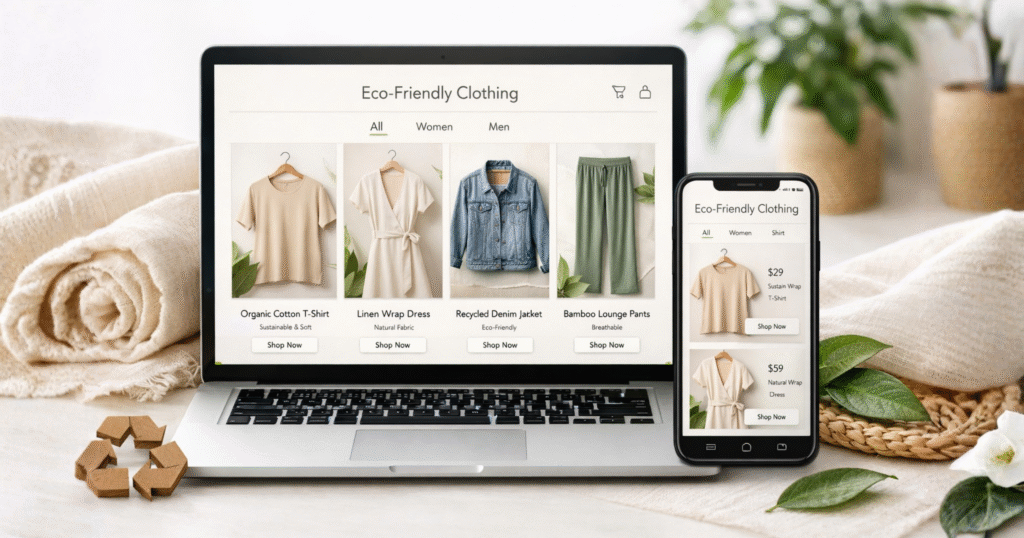
The American fashion landscape is experiencing a seismic shift. As consumers become increasingly conscious of their environmental footprint, the question is no longer whether sustainable fashion is the future of online clothing in the US, but rather how quickly this transformation will occur. From coast to coast, a growing movement is challenging the fast fashion status quo and reimagining what it means to build a conscious wardrobe in the digital age. The Environmental Wake-Up Call For decades, the fashion industry has operated under a model of excess: overproduction, rapid trend cycles, and disposable clothing that ends up in landfills within months of purchase. The statistics are staggering: the fashion industry produces 10% of global carbon emissions and remains the second largest consumer of water worldwide. In the United States alone, approximately 11.3 million tons of textile waste end up in landfills each year, with the average American throwing away about 81 pounds of clothing annually. This unsustainable trajectory has sparked a revolution. Understanding why sustainable fashion is the future of online clothing in the US requires examining the convergence of environmental necessity, technological innovation, and shifting consumer values. American shoppers, particularly millennials and Gen Z, are demanding transparency and accountability from brands. They’re asking hard questions about where their clothes come from, who made them, and what happens to them after they’re discarded. The Digital Advantage: E-Commerce as a Catalyst for Change Online retail has become the perfect incubator for sustainable fashion innovation. Without the overhead costs of physical storefronts, digital-first sustainable brands can invest more heavily in ethical production practices, organic materials, and transparent supply chains. The e-commerce model also allows for made-to-order production, significantly reducing the waste associated with unsold inventory that plagues traditional retail. The reason sustainable fashion is the future of online clothing in the US is partly rooted in the inherent efficiency of digital commerce. Online platforms enable brands to tell their sustainability stories in rich, detailed ways through videos showcasing their manufacturing processes, infographics explaining their environmental impact metrics, and direct connections between consumers and the artisans who craft their garments. This transparency builds trust and loyalty in ways that traditional retail never could. Moreover, the data-driven nature of e-commerce allows sustainable brands to predict demand more accurately, produce accordingly, and minimize waste. Advanced algorithms can analyze purchasing patterns, helping brands understand what customers actually want rather than gambling on trends that may never materialize. The Economics of Conscious Consumption Critics often argue that sustainable fashion is a luxury reserved for the wealthy, but this narrative is rapidly changing in the online space. While sustainable garments typically cost more upfront due to quality materials and ethical labor practices, the true cost per wear is often lower than fast fashion alternatives. A well-made organic cotton t-shirt that lasts five years represents better value than five cheap shirts that deteriorate after a season. Online sustainable fashion retailers are also pioneering innovative business models that make conscious consumption more accessible. Rental platforms allow consumers to wear designer sustainable pieces for a fraction of the purchase price. Resale marketplaces extend the lifecycle of garments, keeping them in circulation longer. Subscription services curate sustainable wardrobes based on personal style preferences, eliminating impulse purchases and decision fatigue. This economic evolution demonstrates why sustainable fashion is the future of online clothing in the US. It’s not just an environmental imperative but increasingly a smart financial choice for consumers who are learning to value quality over quantity. Technology Meets Sustainability The intersection of technology and sustainable fashion is producing remarkable innovations. Blockchain technology is enabling unprecedented supply chain transparency, allowing consumers to trace a garment’s journey from raw material to finished product. Artificial intelligence is helping brands optimize fabric cutting to minimize waste, while 3D design tools reduce the need for physical samples during the development process. Online platforms are also leveraging augmented reality to reduce return rates, one of e-commerce’s biggest sustainability challenges. Virtual try-on features help customers make better purchasing decisions, decreasing the environmental impact of shipping items back and forth. Some brands are even experimenting with digital fashion, creating virtual garments for social media and gaming platforms that require zero physical resources. These technological advancements underscore why sustainable fashion is the future of online clothing in the US. The digital realm offers tools for addressing sustainability challenges that brick-and-mortar retail simply cannot match. The Power of Community and Education Online sustainable fashion brands are building communities, not just customer bases. Through social media, blogs, and email newsletters, these brands educate consumers about the true cost of fast fashion and empower them to make informed choices. This educational component is transforming shopping from a mindless transaction into a meaningful act of environmental stewardship. The digital space allows for peer-to-peer influence in unprecedented ways. When influencers and everyday consumers share their sustainable fashion journeys online, they normalize conscious consumption and inspire others to follow suit. User-generated content showcasing styling tips for sustainable pieces or creative ways to extend a garment’s life creates a virtuous cycle of engagement and awareness. Understanding why sustainable fashion is the future of online clothing in the US means recognizing the power of collective action. Every purchase becomes a vote for the kind of fashion industry we want to see, and online platforms amplify these individual choices into a movement for systemic change. The Regulatory Tailwind Government regulations are increasingly supporting the shift toward sustainability. While federal legislation in the US has been slower than in Europe, individual states are taking action. California’s textile recycling law and New York’s Fashion Sustainability and Social Accountability Act signal growing political will to address fashion’s environmental impact. These regulations will disproportionately affect traditional retailers with massive inventories, giving nimble online sustainable brands a competitive advantage. Corporate sustainability reporting requirements are also becoming more stringent, forcing all fashion companies to measure and disclose their environmental impact. Online brands that have built sustainability into their DNA from day one will find compliance far easier than legacy companies attempting to retrofit unsustainable

Scroll to Top